Product · 2024 – 25
Mero Braj
A virtual museum for 100+ heritage sites of the Braj region — grant-funded, shipped, later acquired.
- Role
- Proposal, grant and technical lead
- When
- 2024 – 25
- Stack
- Next.js · React · Three.js · 360° media · GraphQL · Express · MongoDB · CDN
- Links
- Live site
Why it needed to exist.
Braj’s heritage is spread across an entire region and barely documented online. The goal was one place to explore it — the stories, the locations, the courtyards themselves — without needing a high-end device or a fast connection.
A web platform for exploring the temples, kunds and heritage sites of Braj through an interactive 3D map and 360° tours — built by a team of four and designed for the phones most visitors carry.
Constraints
- Heavy media — 3D maps and 360° panoramas — on low-end phones and patchy networks.
- A team of four on a grant timeline.
- Map-first, bilingual content that could keep growing after launch.
How Mero Braj serves a region to a phone
Heritage records live in MongoDB behind an Express GraphQL API. A Next.js front end renders fast pages and hands off to a Three.js map and 360° tours, with heavy media lazy-loaded from a CDN.
Every site — its history, location and panoramas — is a structured record.
A GraphQL API lets each screen ask for exactly the fields it shows, keeping mobile payloads small.
Next.js renders pages quickly and keeps them indexable.
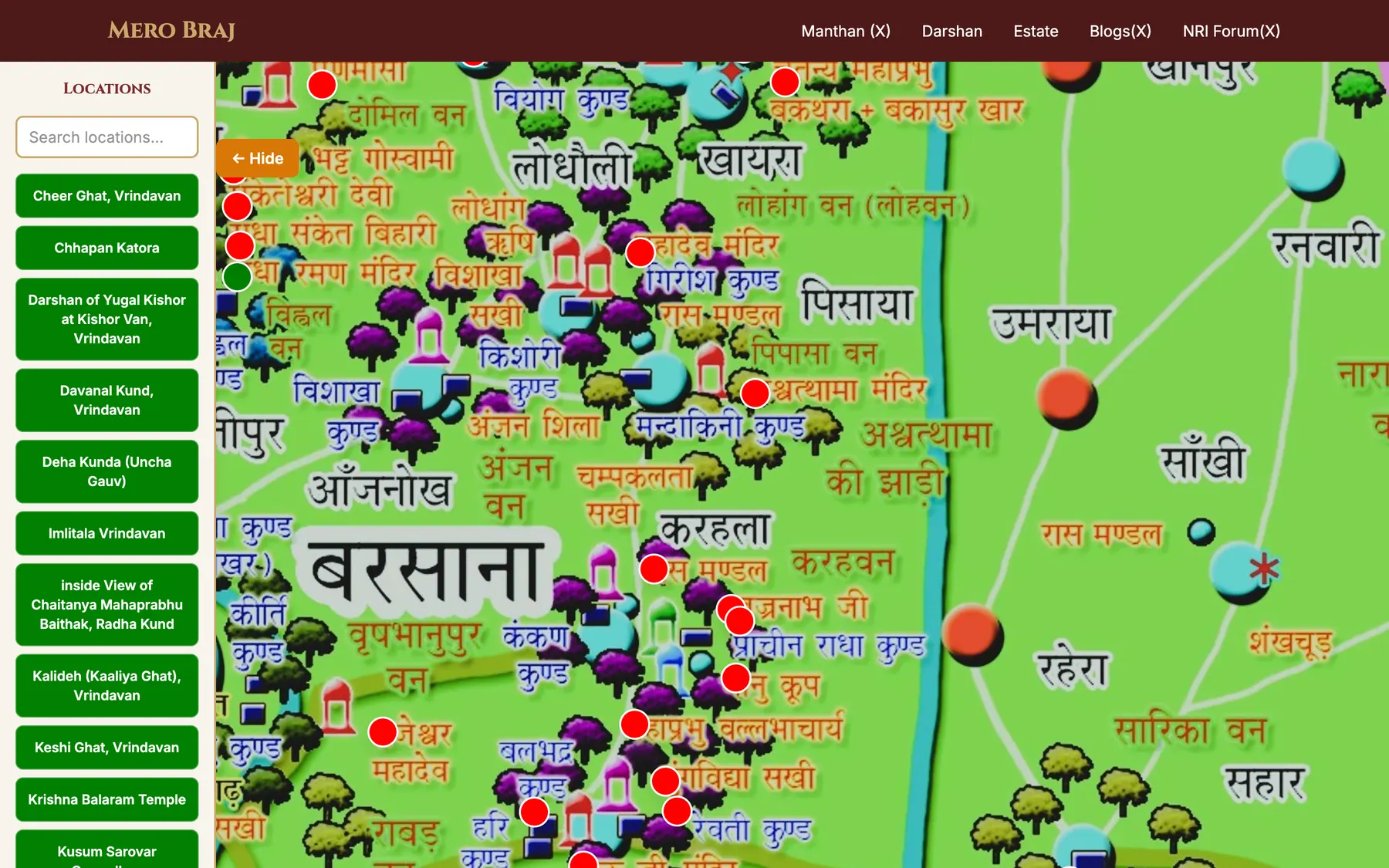
Visitors roam a 3D map and step into 360° temple tours — on phones, by tilting to look around.
Heavy media streams from a CDN only when opened, so it holds up on low-end devices.
In use
What it looks like.
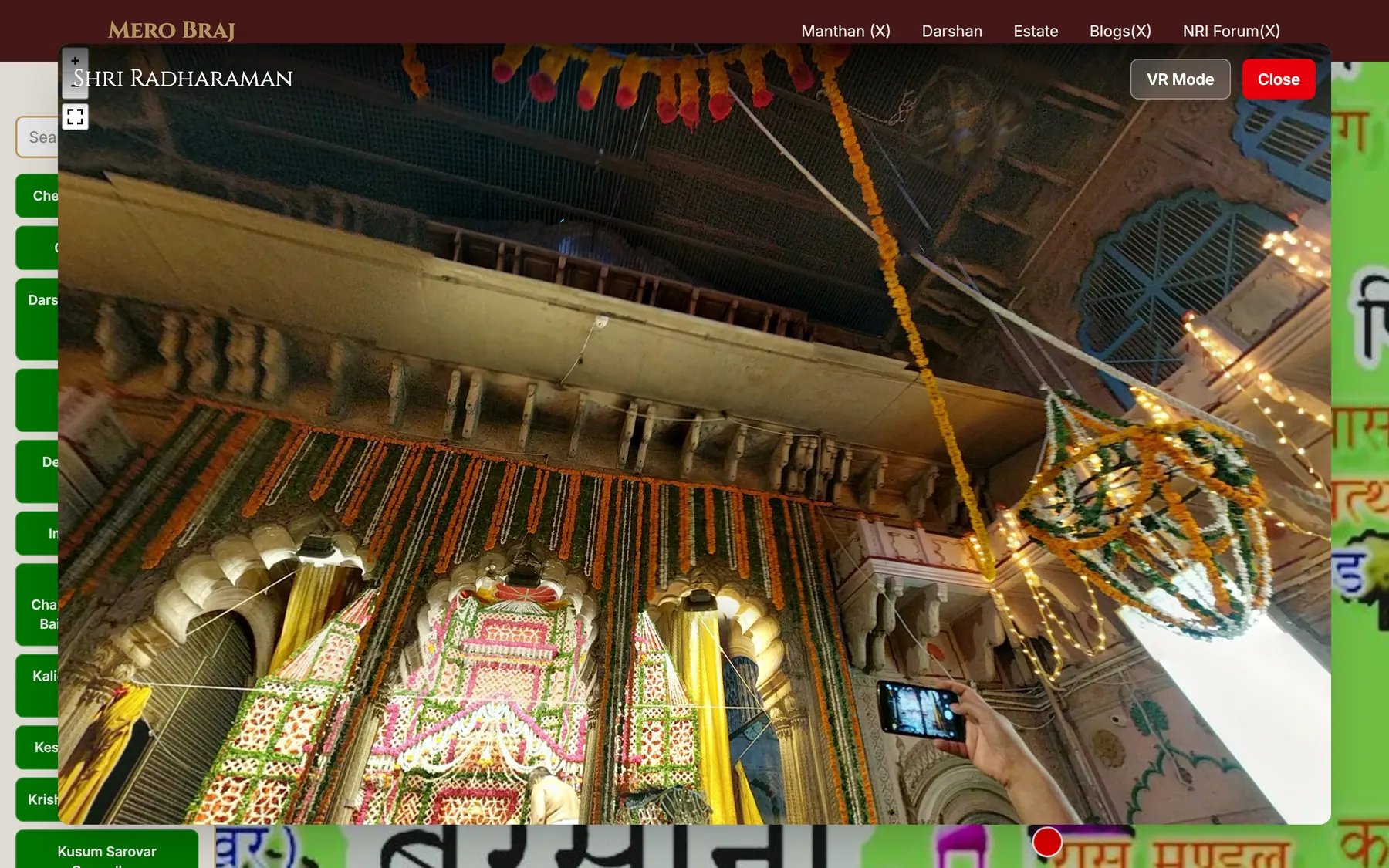
Tap a green marker on the map and the temple opens around you — drag to look, or switch to VR. · captured Sep 2026 from merobraj.org/braj 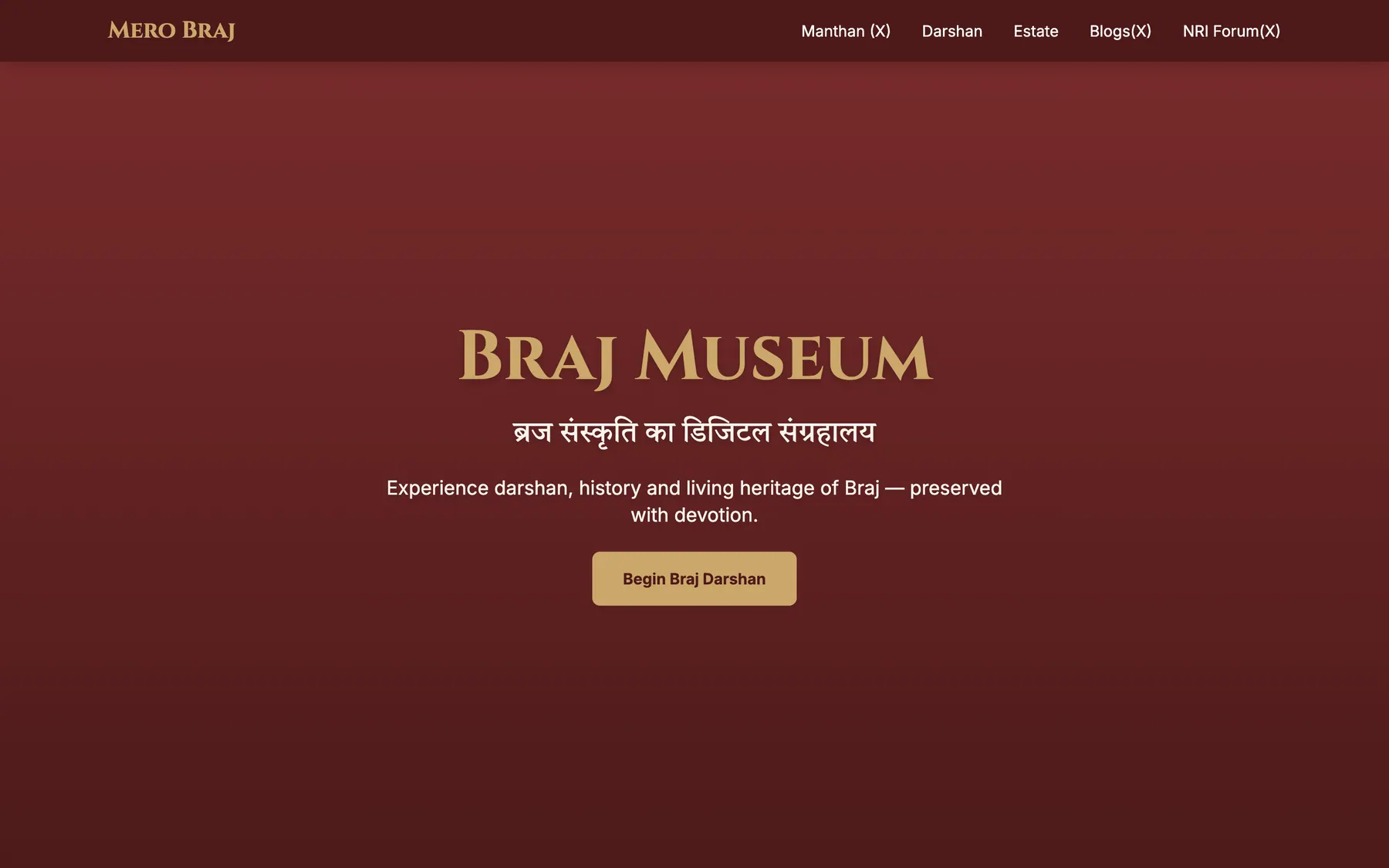
The front door: a digital museum of Braj, in Hindi and English. · captured Sep 2026 from merobraj.org 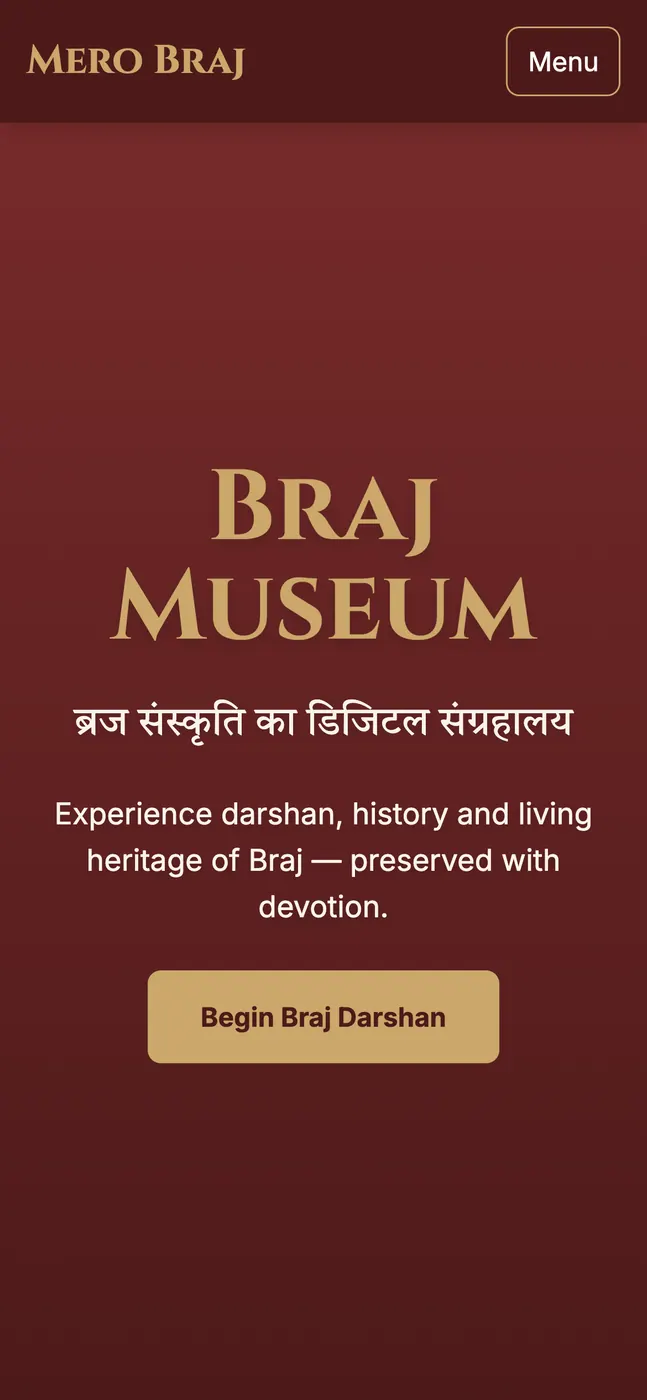
Built for the phones most visitors carry. · captured Sep 2026 from merobraj.org
Three choices, and what each one cost.
- 01
GraphQL between content and screens
Each view requests exactly what it renders, which keeps payloads small on slow mobile networks.
Trade-offMore schema design up front than a plain REST API.
- 02
Lazy-load every heavy asset
Panoramas and 3D assets load only when a visitor opens them, streamed from a CDN.
Trade-offA brief loading moment per scene instead of one long wait at the start.
- 03
Tilt-to-look navigation
Gyroscope navigation makes a 360° tour feel like standing in the courtyard.
Trade-offNeeds a touch fallback for devices and browsers without motion access.
What changed.
- heritage sites mapped
- 100+
- people on the team, led end to end
- 4
- after launch
- Acquired
- The acquiring party is not named here.
The next version.
Offline-first tours for places with no signal, and a simple editor so local historians can add sites without a developer.
Something like this on your plate? Write to me.